
This policy updates the previous Smoke Free Environment Policy in line with the most recent evidence, practice standards and government ambition to create a ‘Smoke-free Generation’ by 2030.
The policy outlines how the Trust will promote and support a healthy environment free from tobacco use for all who use WSFT services, premises, or work at the Trust. This policy applies to all employees and colleagues including temporary or agency, visitors, contractors, and volunteers, and patients and service users on acute sites and community settings including patient’s homes whilst WSFT colleagues are present and business cars/vehicles. Colleagues should comply with this policy in line with the ‘expected standards policy PP053’ and ‘respect for others policy PP080’. Complaints will be dealt with in line with these policies and ‘Managing conduct and expected standards policy PP040’.
Contents
- Aim
- Key points and actions for everyone
- Definitions
- Health and safety at work
- Responsibility
- The NHS Smokefree pledge
- Vaping, vape and e-cigarette
- Implementation
- Supporting people to remain smoke free
- Protecting people from tobacco smoke
- Smoking areas and smoking related litter
- Communications
- Official breaks and uniform
- Residencies
Aim
The aim of this policy is to protect and improve the health of all those using WSFT services and support people who use tobacco to remain smoke-free whilst working, staying, or visiting WSFT premises. Tobacco dependence is the addiction to tobacco products caused by nicotine; people smoke because they need to service their addiction. The Trust will promote a ‘smoke-free zone’ and encourage:
- Patients to have a smoke-free stay
- Staff to have a smoke-free shift
- Visitors to have a smoke-free visit
- West Suffolk NHS Foundation Trust to have a smoke-free future
Key points and actions for everyone
- Smoking tobacco is the leading cause of preventable ill health and death and is the biggest driver of health inequalities. Tobacco smoking is driven by addiction to nicotine.
- Second and thirdhand tobacco smoke is dangerous and causes poor health and disease.
- Smoking is not permitted anywhere within the Trust, including buildings, grounds and community settings including patient’s homes and business cars/vehicles.
- The Trust Board supports The NHS Smoke-free Pledge.
- Everyone is responsible for ensuring and maintaining a smoke-free WSFT.
- Everyone must advise patients and visitors of the Smoke-free Policy prior to, and on admission to the Trust premises, including in people’s homes.
- We have a duty to protect everyone from the harms of tobacco smoke.
- There is support available with multiple options for people to remain smoke-free.
- There are designated ‘smoking areas’ if people cannot remain smoke-free on Trust premises.
- Communication and signage will support colleagues to address smoking on Trust premises.
- Concerns about smoking on WSFT premises should be reported through Radar.
Definitions
Tobacco dependence
Tobacco dependence is the addiction to tobacco products caused by nicotine. People often smoke tobacco in the form of cigarettes, roll-ups, and cigars. Other forms of tobacco use include chewing and pipes or mixing tobacco with other substances. Tobacco dependence treatment is effective and improves the health and wellbeing of the person smoking and their family, as well as saving them money.
Smoking
Smoking tobacco remains the largest cause of health inequality in England and is the main reason for disparities in life expectancy between more and less affluent populations. Smoking tobacco is the leading cause of preventable illness and premature death in England. Smoking increases a person’s risk of developing many diseases.
Second-hand smoke
Second-hand smoke from tobacco smoke is dangerous. It has been associated with multiple conditions including heart disease, lung cancer, dementia, acute respiratory conditions, and worsening of asthma and COPD. Babies and children are especially vulnerable to the effects; exposure to second-hand smoke increases the risk of lower respiratory tract infections, prevalence of asthma and middle ear infection.
Thirdhand smoke
Thirdhand smoke is the residual tobacco smoke that travels on to indoor surfaces and remains; during the aging process the chemicals can desorb back into the air and react to form new chemicals. These chemicals have been found in objects such as carpets, walls, furniture, blankets, toys, and fleece.
Vaping, vapes or e-cigarettes
Are all the same and are now mostly referred to as vapes and vaping. They are an electronic device used as a stop smoking aid. Nicotine containing vapes are much less harmful than tobacco smoke and a successful tool to achieve smoking cessation.
Smoke-free
The term used to describe an area or person where there is no smoke generated from cigarettes (dictionary definition).
Smoking area
A West Suffolk Council officially designated area for smoking equipped with specialist bins for safe and responsible disposal of cigarettes and smoking related litter.
Trust and Trust premises
Any acute or community setting owned by West Suffolk NHS Foundation Trust Anyone employed by West Suffolk NHS Foundation Trust Any home or other premises West Suffolk NHS Foundation Trust colleagues visit for business purposes e.g., to deliver care or attend a meeting.
Health and safety at work
The Health and Safety Executive specifies that:
…employers should have a specific policy on smoking in the workplace and that priority should be given to the needs of non-smokers not wanting to breathe second-hand smoke, finally the policy must be suitable for the individual workplace.”
Section 2(2)(e) of the Health & Safety at Work Act 1974 places a duty on employers to:
… provide and maintain a safe working environment which is, so far as is reasonably practical, safe, without risks to health and adequate as regards facilities and arrangements for their welfare at work”
The Management of Health and Safety at Work Regulations 1999 cite under the General Principles of Prevention, the following:
- Avoiding Risks
- Combating risks at source
- Replacing the dangerous by the non-dangerous or the less dangerous
- Giving collective protective measures priority over individual protective measures.
Trust fire safety training specifically highlights smoking and/or cigarette lighters as one of the three most common causes of fire in the NHS, along with electrical items and arson.
Responsibility
- Members of West Suffolk NHS Foundation Trust Board are accountable for this policy.
- All colleagues have day-to-day responsibility for implementation and adhering to the policy.
- Any concerns about smoking on Trust premises should be reported through Radar.
The NHS Smokefree Pledge
In September 2024 the Trust board signed the NHS Smokefree Pledge, which forms the basis for this policy and its content alongside NICE Guidance NG209 and QS207 and the CLeaR local tobacco control assessment.
Vaping, vape and e-cigarette
Vaping is a NICE and National Centre for Smoking Cessation Training (NCSCT) recommended treatment option for smoking cessation and therefore is encouraged for this purpose only. The courtyards at West Suffolk Hospital are strictly vape-free zones, along with any pathway next to Trust buildings, windows and doors. People who vape should do so with respect for others in mind. Some people are offended by vaping and/or find it antisocial. Vapers must be considerate when vaping on Trust premises. Vaping is permitted on WSFT premises when:
- The person is vaping as a nicotine replacement option for smoking cessation.
- The person is away from buildings, and any windows or doors e.g., the road is between the building and the person vaping.
- There is no signage to indicate a vape-free zone.
- Colleagues must ensure that their uniform is covered, that their ID badge is not visible, and it is not otherwise apparent that they are an NHS employee. Any concerns about colleagues vaping in uniform should be reported directly to line managers and/or through Radar.
No vapes can be disposed of on WSFT premises. Vapes are subject to Waste Electrical and Electronic Equipment (WEEE) Regulations and must be disposed of in line with this. Appropriate disposal is essential and only through a dedicated recycling centre or bin.
Individuals are responsible for the storage and charging of their own vaping devices. Safety advice is in line with other rechargeable electronic devices using lithium batteries. Do not chargevapes on WSFT premises unless this has been approved by a manager and appropriate portableappliance testing and risk assessment has been completed.
Patients using oxygen
It is advised that patients using oxygen should not be given a vaping device and alternative pharmacotherapy including nicotine replacement therapy (NRT) is available for patients that require oxygen.
For more information about vaping at WSFT see the standard operating procedure: Issuing vaping devices and e-liquids for tobacco dependence services.
Implementation
Smoking is not permitted anywhere within the Trust, including buildings, grounds and communitysettings including patient’s homes whilst WSFT are present and business cars/vehicles.
Any concerns about smoking on Trust premises should be reported through Radar.
If a smoker becomes angry or violent, it might be because of nicotine withdrawal. If a smoker is distressed for any reason, they should be comforted and offered nicotine replacement therapy(NRT). Where unacceptable behaviour continues, the Unacceptable Behaviour by patients, service users and members of the public policy will apply.
Supporting people to remain smoke-free
It is recognised that for this policy to be successfully implemented, supporting people who smoketo remain smoke-free whilst on Trust premises is paramount.
Nicotine replacement therapy is a general sale list (GSL) medication and is available for sale inmost supermarkets, pharmacies, and online retailers. The hospital pharmacy has NRT available for purchase.
Whenever possible, anyone seen smoking on Trust premises will be approached by a trained tobacco dependence adviser, or other fully trained professional for a conversation about remaining smoke-free. Current services available to support this are:
Inpatients
All inpatients must have their smoking status recorded. The inpatient tobacco dependence service will deliver specialist advice and support to anyone identified as a smoker and remaining in hospital for longer than 24 hours. All inpatients can receive Very Brief Advice (VBA) from aVBA trained healthcare professional:
Ask – smoking status and record it in the electronic patient record (EPR).
Advise – the best way to stop smoking is with specialist treatment (e.g., NRT) and behavioural support.
Act – Prescribe NRT and/or refer to a specialist service. For more information about the inpatient tobacco dependence service or VBA training, please see:
Maternity
Smoking during pregnancy increases the risk of complications, such as stillbirth, preterm birth, miscarriage, low birthweight, and sudden infant death syndrome (SIDS). Smoking during pregnancy has a far-reaching impact on the health of a child throughout their life. All pregnant people and their household members who smoke are supported by the smoke-free pregnancy team. This service is initiated when the pregnancy is booked with the team. The smoke-free pregnancy midwife/team will visit or contact the family regularly, to support the household to be smoke-free. All pregnant people who smoke must be reported to the smoke-free pregnancy team by emailing stopsmokingmidwife@wsh.nhs.uk.
Supporting pregnant people to stop smoking will contribute to the national ambitions to halve the rates of stillbirths by 2025, reduce health inequalities and improve the long-term health of mothers and babies. More information about the smoke-free pregnancy pathway at WSFT is available in the Carbon Monoxide Monitoring in Pregnancy And The Management of Those Who Smoke in Pregnancy.
Visitors
Visitors can be directed to NRT for sale. The hospital pharmacy has NRT available for purchase.
The tobacco dependence advisers can support visitors with a free vape option alongside advice and support about local stop smoking services if someone would like to make a quit attempt. There is no referral route to the advisers, but visitors can be signposted to speak to a tobacco dependence adviser on site. For more information about this, email: tobacco.dependence@wsh.nhs.uk
Emergency department (ED) and outpatients
A specialist tobacco dependence adviser will work in the ED to support people who smoke to remain smoke-free whilst they are in the department. The adviser will have nicotine containing products (mainly vapes) available for people to use immediately and provide advice about community stop smoking services and support on how to remain smoke-free whilst at the Trust and longer-term. An alternative is for people to be directed to the hospital pharmacy to purchase NRT.
Colleagues
A service to support all colleagues across the NHS and local authority (WSFT, East of England Ambulance Service – EEAST, Norfolk and Suffolk Foundation Trust – NSFT, Suffolk County Council – SCC and West Suffolk Council – WSC, private ambulance etc.) to remain smoke-free on Trust premises and make quit attempts is available with the following options offered:
- One-to-one behavioural support and advice from a specialist adviser.
- Several NRT options available to collect from a selected pharmacy up to 12 weeks supply.
- Nicotine vapes 8-weeks supply.
- Allen Carr’s Easyway ® seminars.
- The Smoke Free App .
- Advice about community and other digital-based support available.
The WSFT library services have copies of Allen Carr’s Easy Way to Stop Smoking book availableto loan for anyone interested in this approach to smoking cessation.
For more information about all the tobacco dependence services available at WSFT, please refer to: Service standards for treating tobacco dependence.
If a colleague would like help or support to stop smoking, please contact quit.smoking@wsh.nhs.uk
Community stop smoking services
Community stop smoking services are available for anyone who smokes to access with several options for treatment and support available. Anyone can make a self-referral or a professional referral with consent. Local services are:
- Suffolk: Feel Good Suffolk
- Norfolk: Smoke-free Norfolk
- Essex: Essex Wellbeing Service
- Cambridgeshire: Healthy You
The NHS Better Health website has information, resources and a service finder available
Protecting people from tobacco smoke
Patients and visitors must be advised of the Smoke-free Policy prior to, and on admission to the Trust premises, including in people’s homes.
When working in Trust buildings
To protect colleagues, patients, and visitors from exposure to second-hand smoke travelling into Trust buildings, the following steps are required to be followed:
- Report any incidents involving second-hand smoke in the building on Radar providing detail on where the smoke has come into the building from.
- If you see anyone smoking on Trust premises you can take any of the following actions:
- ask them politely to stop
- ask them to move to one of the designated ‘smoking areas’
- advise them the best way to stop smoking is with specialist treatment and support and/or provide them with details on local stop smoking services
- advise them that NRT is available for sale in the hospital pharmacy and this will reduce the need to smoke
- advise them that vaping is an alternative to smoking whilst on Trust premises
- point them to one of the hospital tobacco dependence advisers (if available).
- If anyone wants to complain directly about second-hand smoke or witnessing smoking on Trust premises, advise them to contact PALS (patient advice and liaison service) .
When visiting people in their homes
To protect staff from exposure to second-hand smoke when visiting people in their homes, thefollowing steps are required to be followed:
- Record everything in the electronic patient record.
- Ask if the patient or anyone in the household smokes and request:
- they avoid smoking inside for at least one hour before the healthcare worker is due to arrive
- open windows and doors to ventilate the room where the visit will take place
- strictly no smoking by anyone in the house whilst the visit is taking place
- advise them the best way to stop smoking is with specialist treatment and support and/or offer to refer to local stop smoking services.
Smoking areas and smoking related litter
West Suffolk Council has officially designated areas along the Hardwick Heath and West Suffolk Hospital boundary as ‘smoking areas’. These are monitored and equipped with specialist bins for safe and responsible disposal of cigarettes and smoking-related litter.
Littering is a criminal offence and WSC requests WSFT support to keep west Suffolk a litter freezone by putting litter in the bins provided. Under the Environmental Protection Act 1990 those caught littering can be issued a fixed penalty notice of £80 rising to £2,500 if this is taken to court.
Littering also includes placing unauthorised seating in a ‘smoking zone’. If seating is found and requires removal, anyone identified as responsible will be liable for all costs incurred and will be subject to disciplinary action.
The Helipad area is strictly NO SMOKING. Any NHS employees seen smoking in this area will be reported on Radar and to their manager, which can lead to disciplinary action. It is dangerous to smoke in this area, causing a fire hazard and potential obstruction in an emergency.
Communications
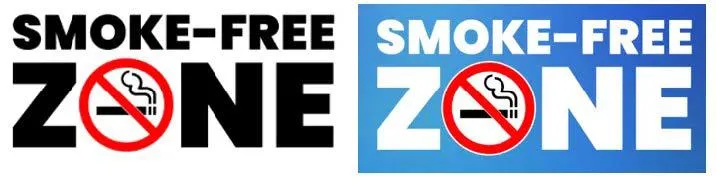
The messages about the Trust being a ‘smoke-free zone’, the harms smoking causes and the support available to people who want to stop smoking will be clear and concise and avoid any confusion. The branding to support WSFT to be smoke-free is:
Signage
All signs will be consistent and simple to read and understand. Signs will be placed on entrancesand exits and sporadically around the site(s) perimeter to remind people that Trust premises area smoke-free zone.
Wayfinding
There will be directions for people to find the ‘smoking areas’ easily and clear signage for ‘no smoking’ where applicable.
Bins and benches
Suitable bins for safe and responsible disposal of cigarette litter are available in the ‘smoking areas’. Bins on the hospital site are not to be used for disposal of cigarette litter. Any concerns about a bin being used as an ashtray should be reported through Radar.
Benches are available for people to use/sit on and enjoy. They are not provided as a place for people to smoke. Smoking is strictly prohibited on any bench on Trust premises, and signage will reflect this. You can kindly ask people to move to a ‘smoking area’ if you see people smoking whilst sitting on benches.
Patient letters and information
All patient letters will include information about the smoke-free policy:
West Suffolk NHS Foundation Trust supports the NHS Smokefree Pledge. This means no smoking is allowed anywhere on our grounds, even when our staff visit your home. The best way to stay smoke-free is by using nicotine replacement therapy or a vape with nicotine. If you're thinking about quitting, you can get help and find local support services :
Further information for the public and colleagues is available on WSFT internet.
Inductions, staff welcome and appraisals
Information about the Smoke-free Policy and the importance of adherence with it will be provided in:
- Job advertisements
- Contractual offers of employment
- Induction processes (including in Totara )
- Trust welcome sessions
- One-to-one and appraisal conversations – encouraged discussion within wellbeing section and objective
- Supporting attendance conversations where applicable.
Colleagues will be offered opportunities and support to stop smoking and/or remain smoke-free whilst on shift/at work.
Contractors
All tenders and contracts with WSFT will stipulate adherence to this policy as a contractual condition.
Training
Training and resources are available for anyone who would like to be more involved in supporting people who smoke to either remain smoke-free or make a quit attempt. Support and face-to-face training can be organised and/or provided by the tobacco dependence team: tobacco.dependence@wsh.nhs.uk . All core information is available from NCSCT. More information about training competencies for tobacco dependence advisers is available in the Service standards for treating tobacco dependence.
Health Coaching Skills and Shared Decision Making training is recommended for anyone considering having conversations about tobacco dependence and/or smoking cessation. Both are accredited by the Personalised Care Institute and available to all WSFT colleagues.
Official breaks and uniform
It is the role of colleagues to ensure that all staff are aware of the Smoke-free Policy, and how to access help and support in stopping smoking and advice on how to be smoke-free at work.
Under the Working Time Regulations 1998, where staff work for longer than six hours, they are entitled to a break of a minimum of 20 minutes unpaid. The Trust encourages all staff to take a break.
No additional or extended breaks should be granted for people to smoke. Breaks should betaken in a manner consistent with maintaining minimum staffing levels. Where colleagues choose to use their break to smoke, they must leave the Trust premises or make their way to a designated ‘smoking area’. Managers need to plan effectively for staff who leave the premises on breaks for any reason.
Where colleagues smoke in a public place or ‘smoking area’, they must adhere to the ‘ dresscode and uniform policy ’ and must ensure their uniform is fully covered, that their ID badge is notvisible, and it is not otherwise apparent that they are an NHS employee. Smokers should beaware that the smell of cigarette smoke on clothing can be offensive to a non-smoker.
There are evidenced concerns that thirdhand smoke can still occur in outdoor environments and be absorbed into clothing being worn while smoking. These chemicals can be absorbed through the skin, ingested, or inhaled. Infants and children are deemed to be most at risk from third hand smoke. There is evidence to suggest that thirdhand smoke may negatively impact health. In addition to the smell of cigarette smoke on a person and clothing being unpleasant for others, patients can be exposed to thirdhand smoke from colleagues smoking in uniforms and there fore this should be always avoided.
Any concerns about colleagues smoking in uniform should be reported directly to line managers and/or through Radar.
Residencies
Paragraph 12.2 in the licence that tenants sign states:
…not to smoke tobacco or any other substance within the Room or any area of the Property, other than external designated smoking areas. In addition, the welcome booklet for residents’ states: Smoking is strictly forbidden inside and outside the premises. A smoking shelter is located opposite Bloomfield House. This is the only agreed location for smoking. Any resident found to have been smoking anywhere inside or outside this area will be asked to leave accommodation immediately.
References
- UK. Stopping the start: our new plan to create a smoke-free generation. Stopping the start: our new plan to create a smoke-free generation. Department of Health and Social Care, November 8, 2023.
- Office for Health Improvement & Disparities. Smoking and tobacco: applyingAll Our Health. London: Office for Health Improvement & Disparities, 2022
- Bahl, Vasundhra, et al. Thirdhand Cigarette Smoke: Factors Affecting Exposure and Remediation. PLoS ONE. 2014, Vol. 9, 10.
- Ill, Peyton Jacob, et al. Thirdhand Smoke: New Evidence, Challenges, and Future Directions. Chem Res Toxicol. 2017, Vol. 30, 1.
- Action on Smoking and Health, ASH. The NHS Smoke-free Pledge. [ONLINE]September 27, 2024. The NHS Smoke-free Pledge - ASH
- Health and Safety Executive. Advice on smoking at work. [ONLINE] July2019. Advice on smoking at work
- gov.uk. Health and Safety at Work etc. Act 1974. July 2019. Health and Safety at Work etc. Act 1974
- NHS England. Tobacco dependency programme. [ONLINE] August 23, 2024. NHS England » Tobacco dependency programme
- Public Health England. Health matters: stopping smoking - what works?. London: Public Health England, 2019.
- Action on Smoking and Health. Second hand Smoke. London: ASH, 2020.
- gov.uk. The Management of Health and Safety at Work Regulations 1999.[ONLINE] July 2019. The Management of Health and Safety at Work Regulations 1999
- NICE: National Institute of Health and Care Excellence. Tobacco: preventinguptake, promoting quitting and treating dependence; NG209. [ONLINE] May14, 2023. https://www.nice.org.uk/guidance/ng209
- NICE: National Institute of Health and Care Excellence. Tobacco: treating dependence; QS207. [ONLINE] May 14, 2023.
- UK. Guidance CLeaR local tobacco control assessment. [ONLINE] May 14,2023.
- NCSCT: National Centre for Smoking Cessation and Training. NCSCT Online Training. [ONLINE] May 14, 2023.
- UK. Regulations: Waste Electrical and Electronic Equipment (WEEE).[ONLINE] January 23, 2025.
- UK. Medicines and Healthcare products Regulatory Agency. Guidance: Rules for the sale, supply and administration of medicines for specific healthcare professionals. [ONLINE] August 23, 2024.
- NHS England. Saving Babies’ Lives Version Three, V3.1, July 2023.[ONLINE] August 23, 2024.
- Pope et al., Cessation of Smoking Trial in the Emergency Department(COSTED): a multicentre randomised controlled trial. BMJ Emergency Medicine Journal 2024; 41: 276-282.
- Allen Carr’s Easyway. Smoking. [ONLINE] September 30, 2024. Allen Carr's Easyway - Quit Smoking, Alcohol & Drugs Today!
- Smoke Free. About the app: How to quit. [ONLINE] January 15, 2025. About the app - Smoke Free
- Feel Good Suffolk. Stop Smoking. [ONLINE] August 16, 2024. Stop Smoking- Feel Good Suffolk
- Smoke-free Norfolk. [ONLINE] August 16, 2024. Home | Smoke-free Norfolk
- Essex Wellbeing Service. Stop Smoking. [ONLINE] August 16, 2024. Stop Smoking - Essex Wellbeing ServiceEssex Wellbeing Service
- Healthy You. Stop Smoking. [ONLINE] August 16, 2024. Stop Smoking -Healthy You
- NHS Better Health. Quit smoking. [ONLINE] August 16, 2024. Quit smoking -Better Health - NHS
- Find stop smoking support services. [ONLINE] September 20, 2024.
- West Suffolk NHS Foundation Trust. PALS (Patient advice and liaison service). [ONLINE] August 16, 2024.
- Lincolnshire Partnership NHS Foundation Trust. Smoke-free FAQs. [ONLINE]August 16, 2024.
- West Suffolk Council. Litter. [ONLINE] September 20, 2024.
- gov.uk. The Working Time Regulations 1998. [ONLINE] July 2019.
- Darlow, SD, et al. Thirdhand smoke beliefs and behaviours among health care professionals. Psychol Health Med. 2017, Vol. 22, 4.