
- If inspectors do not have visible identification, politely ask them to show their official ID before proceeding.
- Welcome inspectors warmly and maintain a friendly, professional attitude throughout.
- Answer all questions openly and honestly.
- If you don’t know the answer, don’t panic – explain who you would normally ask or where you would go for the information.
- If problems have been escalated, inform inspectors what actions have been taken.
- Continue with business as usual and behave as you normally do.
- If you are caring for patients, prioritise their needs. Politely inform inspectors if you need to finish patient care first – they will understand.
- If inspectors wish to observe patient interactions, check with the patient first. If they decline, respect their confidentiality and decision.
- Inspectors will ask to view e-Care or SystmOne. Assist them and do not leave them unattended with the system.
- Use the inspection as an opportunity to demonstrate the excellent care and services you provide.
- There is nothing to worry about regarding the inspection; do the job you already do well, be proud of your service, and be honest about what you do and don’t like about working here.
These practices should be part of everyday standards – not just during an inspection.
- Declutter clinical areas: keep workspaces tidy and remove outdated posters or leaflets.
- Always ensure you are bare below the elbows and colleagues are politely challenged to do the same.
- Ensure hand hygiene is observed before and after every patient interaction.
- Update notice boards: ensure patient and visitor information is current and accurate and laminated where required.
- Know your policies: familiarise yourself with key policies and procedures relevant to your role. If you are the author of any, review and update them as needed.
- Check equipment and medicines: make sure everything is in date, stored correctly, and documented.
- Check online content: ensure any intranet pages you are responsible for do not contain outdated information.
- Raise concerns: discuss any service issues with your manager so they can be addressed.
- Ensure your mandatory training and appraisals are up to date: inspectors may ask about records.
- Patient feedback: be ready to discuss how you gather and act on patient feedback.
- Record actions taken from data collected.
- Know the top three risks and the last patient safety incident related to your service/area and what was learnt from it.
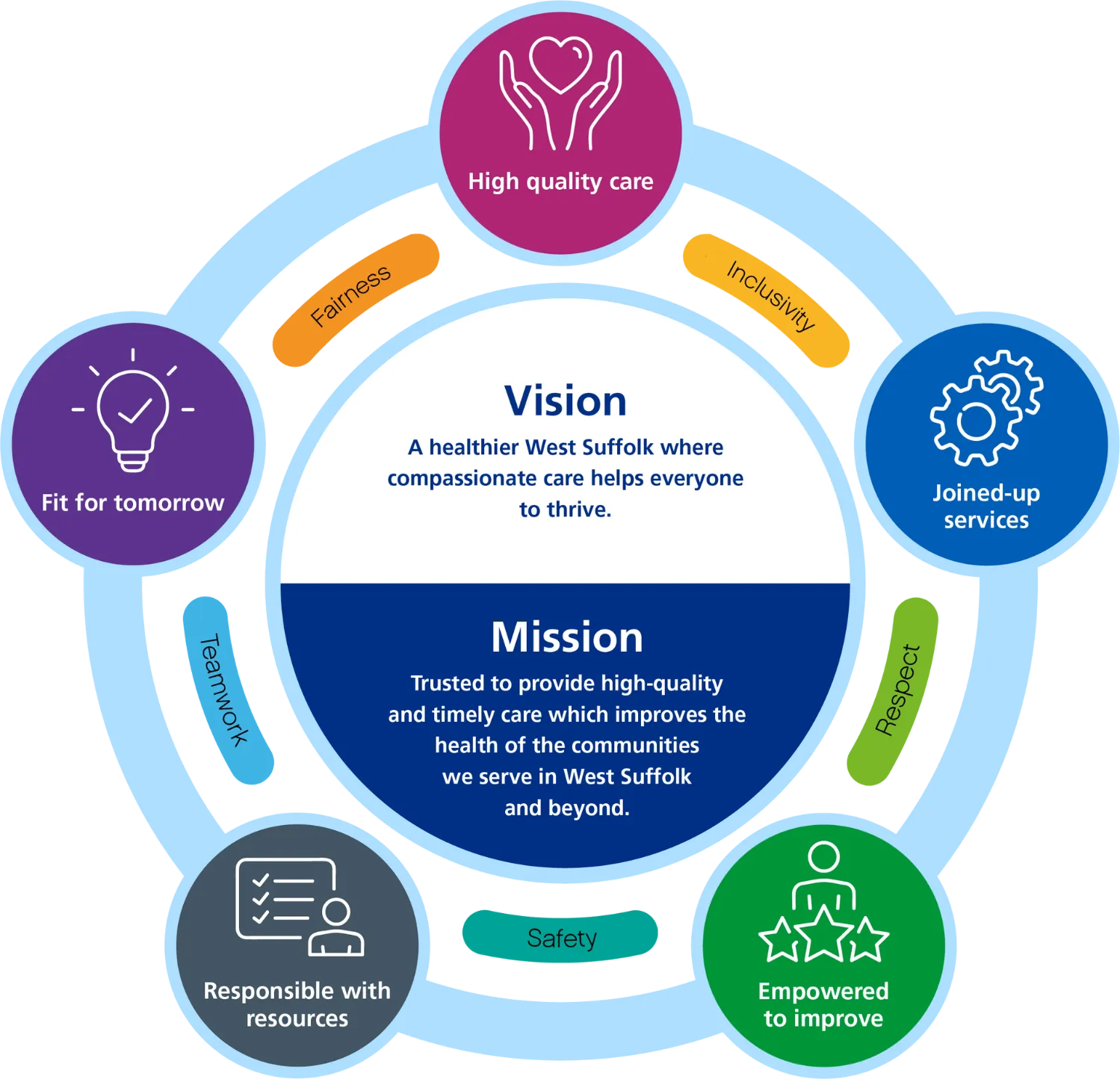
The Trust’s strategy – compassionate care, healthier communities - sets out our plans for 2025-2028.
As part of your preparation for a CQC visit, please familiarise yourself with the strategy which you can find on the Trust intranet (Culture and wellbeing | Vision and strategies | Trust strategy 2025-2028) or on our public website (Our organisation | Our strategy and values).
This strategy will help us successfully navigate the future by focusing on what’s most important.
It is driven by a collective vision to create a 'healthier West Suffolk where compassionate care helps everyone to thrive' and a mission to be 'trusted to provide high-quality and timely care which improves the health of the communities we serve in West Suffolk and beyond'.
The strategy is underpinned by five connected ambitions;
- high quality care
- joined-up services
- empowered to improve
- responsible with resources
- fit for tomorrow.
For each of the ambitions, we have three priority areas we will be progressing over the next three years. Each of the ambitions also sets out the key actions and our measures of impact.
All of this is powered by our FIRST values – Fairness, Inclusivity, Respect, Safety, and Teamwork.
Back: What happens during an inspection