
This leaflet is designed to provide you with information on what to expect with your body and new baby in the first few days and weeks at home.
If you have any questions that are not answered in this leaflet or you would like further information, please speak to your midwife prior to discharge or speak to your community midwifery team.
In this leaflet
- Your body - the first few days and beyond
- How you feel after the birth
- Life with your new baby
- Sudden Infant Death Syndrome (SIDS or cot death)
- Signs and symptoms that your baby is not well - when to get help
If a community midwife has not contacted you by 3pm the day after your discharge, please phone Ward F11 on 01284 713216.
Your body - the first few days and beyond
Your breasts
Your breasts will go through lots of different changes during and after pregnancy, but it is important to monitor these changes and check them regularly. This will help you to identify any abnormal changes. If you have any concerns, please contact your GP.
To begin with, your breasts will produce a nutritious yellowish liquid called colostrum for your baby. On the third or fourth day, they may feel tight and tender as they start to produce milk. Wearing a supportive nursing bra may help. Speak to your midwife if you're very uncomfortable.
You can find out more about breastfeeding in your Mothers and Others Guide (given to you by your team of midwives during your pregnancy).
You can also visit the West Suffolk NHS Foundation Trust website.
Please visit the ‘Coppafeel’ website for more information on breast health or scan the QR code (to the right) for a leaflet on ‘Your Breasts During and After Pregnancy’ for common breast changes and when to speak to a health professional if you have concerns.
Your bladder and bowels
At first, the thought of passing urine can be a bit frightening because of the soreness and because you can't feel what you're doing. Tell your midwife if:
- you’re finding it difficult to pass urine •
- you feel very sore
- you notice an unpleasant smell.
You probably won't need to open your bowels (have a poo) for a few days after the birth, but it's important not to let yourself get constipated.
Piles (haemorrhoids) are very common after birth, but they usually disappear within a few days. Eat plenty of fresh fruit, vegetables, salad, wholegrain cereals and wholemeal bread, and drink plenty of water. This should make bowel movements easier and less painful. Try not to push or strain as this will make the piles worse.
Talk to your midwife or GP if you have constipation or piles that won't go away, if you experience any leaking from your bowels, or if you have urinary incontinence.
What to eat to ease constipation
- Berries
- Prunes
- Vegetables
- Brown rice
- Oats
- Walnuts
- Chia seeds
- Soybeans
Stitches
If you've had stitches after tearing or an episiotomy (cut), bathe them every day and change your sanitary pad regularly to help prevent infection. Have a short bath or shower with plain warm water then carefully pat yourself dry. If your stitches are sore or uncomfortable, tell your midwife. Stitches should absorb by the time the cut or tear has healed. If they have not absorbed, please contact your GP.
If you notice any signs of infection such as an offensive odour, feeling generally unwell, fever, changes in discharge, increasing pain or swelling, then please contact your GP within working hours or triage on 01284 713272 out of hours.
Bleeding after birth
You’ll bleed from your vagina after the birth. It will be quite heavy at first, and you will need super absorbent sanitary towels. Change them regularly, washing your hands before and afterwards. Do not use tampons until after your six-week GP review as this can increase your chance of an infection.
You may notice the bleeding is redder and heavier when you breastfeed. This happens because breastfeeding makes your womb contract. You may also feel cramps similar to period pains. The bleeding may carry on for a few weeks. It will gradually turn a brownish colour and decrease until it finally stops.
If you're losing blood in large clots (bigger than a 50 pence piece) or you are soaking a thick maternity pad within an hour, tell your midwife, or call the triage line as you may need some treatment.
Contraception after birth
Following the birth of your baby, you may wish to consider contraception. It may seem early to start thinking about contraception, but pregnancy can occur from as little as three weeks after birth, even before your first period. Becoming pregnant less than a year after childbirth increases the risks of complications for you and your baby, so it is recommended that a method of contraception is started soon after birth. On F11 we can offer the progesterone only pill, the contraceptive injection, and the implant.
Exclusive breastfeeding (a baby that has never been given formula in a bottle) is only effective as a method of contraception when you have not had a period and are less than six months postnatal. If you would like further information, please speak to your midwife, GP or access our contraception after childbirth leaflet by scanning the QR code.
Anaemia
Anaemia (low iron levels in your blood) is common after giving birth because of blood lost during the delivery. It is important to eat a balanced and varied diet to help you recover. Good sources of iron include:
- liver and other red meat
- beans, nuts and dried fruit – such as dried apricots
- wholegrains – such as brown rice
- fortified breakfast cereals
- most dark-green leafy vegetables – such as watercress and curly kale.
If your blood test shows a low haemoglobin level, you will be prescribed iron tablets. The prescribed tablets are stronger than the supplements you can buy in pharmacies and supermarkets. It is important to take them as directed and you may be advised to have a follow up blood test in two weeks to check your iron levels are improving.
Some people get side effects including constipation, stomach pain, nausea, and vomiting. It is also common for stools (poo) to become darker in colour. Try taking the tablets with, or soon after, food or with orange juice to reduce the chance of side effects.
Keep iron supplement tablets out of the reach of children. An overdose of iron in a young child can be fatal.
Avoiding deep vein thrombosis (DVT) after pregnancy
Deep vein thrombosis (DVT) is a serious condition where a blood clot forms in a deep vein in the body, usually in the leg. If the clot breaks off into the bloodstream, it can block one of the blood vessels in the lungs. This is called a pulmonary embolism (PE) and needs emergency treatment.
Women and those who have had a baby in the past six weeks are at risk of DVT. If you have other factors that put you at risk (smoking, obesity, birth by caesarean, family history etc.) you may be prescribed a blood thinning injection called Tinzaparin, or Dalteparin, and be given TED stockings (flight socks) to wear after the birth of your baby to reduce your risk of DVT.
The QR code below shares a leaflet that provides some useful information on signs and symptoms of a blood clot and when to call a health professional for advice.
Pelvic floor exercises
Pelvic floor exercises can help to stop incontinence, improve prolapse and sex too. You can do these exercises lying down, sitting, or standing.
With practice, they can be done anywhere and at any time:
- squeeze and draw in your anus at the same time, and close up and draw your vagina upwards
- do it quickly, tightening and releasing the muscles immediately
- then do it slowly, holding the contractions for as long as you can, but no more than 10 seconds, before you relax
- repeat each exercise 10 times, 4 to 6 times a day.
The following resources are available to help you if you need additional support or advice:
- Download the SQUEEZY app by scanning this QR code (to the right)
- Register online and complete a self-referral form to access free NHS physiotherapy or calling 03330 433966
- Scan the QR code (below right) for access to free videos from MyHealthLondon on pelvic floor exercises and bladder/bowel care post pregnancy.
Your abdomen
It is normal to have a bump for several weeks / months post-delivery as your muscles will have stretched to accommodate your growing baby and it takes time for this to return to a pre pregnancy state. If you eat a balanced diet and get some exercise, your shape should gradually return to normal. Breastfeeding helps because it makes your womb contract. You may feel quite painful period-like cramps while you are feeding.
These deep stomach muscle exercises can help you tone your stomach muscles:
- lie on your side with your knees slightly bent
- let your tummy relax and breathe in gently
- as you breathe out, gently draw in the lower part of your stomach like a corset, narrowing your waistline
- squeeze your pelvic floor muscles at the same time
- hold for a count of 10, breathing normally, then gently release
- repeat up to 10 times.
Separated stomach muscles (diastasis recti)
During pregnancy the two muscles that run down the middle of your stomach may separate. This is called diastasis recti, or divarication. It happens because your growing uterus pushes the muscles apart, making them longer and weaker. The separation between your stomach muscles will usually go back to normal by the time your baby is eight weeks old. Regular pelvic floor and deep stomach muscle exercises can help to reduce the size of the separation. After you have had your baby, you can check the size of the separation with this simple technique:
- Lie on your back with your legs bent and your feet flat on the floor
- Raise your shoulders off the floor slightly and look down at your tummy
- Using the tips of your fingers, feel between the edges of the muscles, above and below your belly button - see how many fingers you can fit into the gap between your muscles.
Speak to your midwife or access free NHS physiotherapy. Register online and complete a self-referral form or call 03330 433966 if you have any concerns.
Ways to ease back pain
These practical tips may help to relieve an aching back:
- While feeding your baby, always sit with your back well supported and straight. Put a small pillow or cushion behind your waist to support your lower back. Make sure your feet can reach the floor.
- Kneel or squat (do not bend your back) to do tasks that are near the floor, such as picking up toys or bathing your baby.
- Change a nappy on a raised surface. You could kneel on the floor next to a sofa or bed. Never leave your baby unattended on a raised surface in case they fall off.
- Keep your back straight when you push your pram or buggy or, carry your baby in a well fitting sling.
Post caesarean section wound dressings
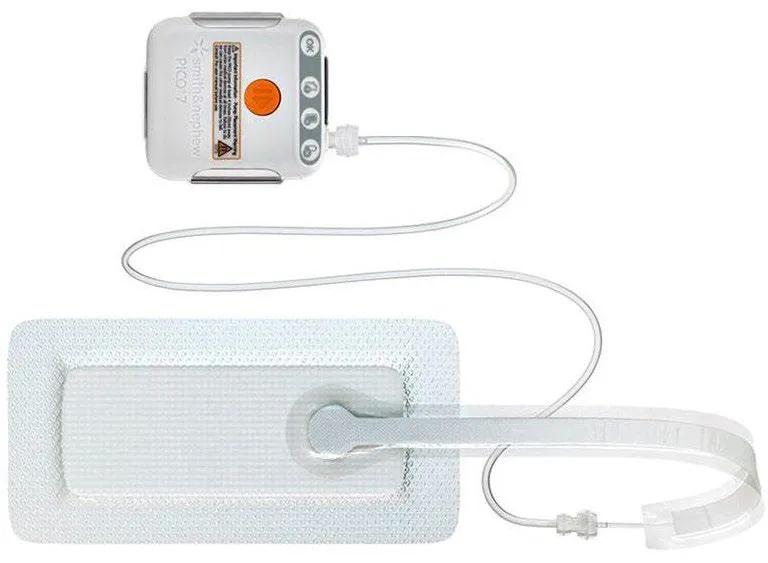
Wound dressings provide the optimum conditions for wound healing, whilst protecting the wound from infection with microorganisms and further trauma. At West Suffolk Hospital you will have one of two wound dressings applied post caesarean.
For low-risk women and birthing people a Mepilex border dressing will be applied to the wound. This remains in place for at least 24-48 hours and can then be removed by yourself or your midwife.

For higher risk women and birthing people, a PICO7 dressing will be applied. A PICO7 is a negative pressure/vacuum assisted wound dressing system. PICO7 dressings must remain in place for seven days and will be removed by your community midwife. PICO7 dressings have a battery box attached, should this flash orange at any point, you must inform your community midwife.
When can I start exercising after birth?
If you had a straightforward birth, you can start gentle exercise as soon as you feel up to it. This could include walking, gentle stretches, pelvic floor exercises and deep stomach exercises. It's usually a good idea to wait until after your six-week postnatal check before you start any high impact exercise, such as aerobics or running. If you had a more complicated birth or a caesarean, your recovery time will be longer, so talk to your midwife, health visitor or GP before starting anything too strenuous.
How you feel after the birth
It is normal to feel a bit down, tearful, or anxious in the first week after giving birth. This is often called the "baby blues" and is very common. The "baby blues" don't last for more than two weeks after giving birth and are due to the sudden hormonal and chemical changes that take place in your body after childbirth. If your symptoms last longer or start later, you could have postnatal depression. Please scan the QR code (to the right) for further information on postnatal depression.
Symptoms that may indicate postnatal depression
Emotional signs of postnatal depression may include:
- loss of interest in the baby
- feelings of hopelessness
- not being able to stop crying
- feelings of not being able to cope
- not being able to enjoy anything
- memory loss or being unable to concentrate
- excessive anxiety about the baby.
Other signs of postnatal depression may also include:
- panic attacks
- sleeplessness
- extreme tiredness
- aches and pains
- feeling generally unwell
- anxiety
- loss of appetite
Getting help for postnatal depression
If you think you have postnatal depression, don’t struggle alone. It’s more common than you think, affecting around 1 in 10 families. Postnatal depression is an illness, and it’s important to seek help as soon as possible. Talk to someone you trust, such as your partner, family member or a friend, as well as a health professional such as your GP, midwife, or health visitor.
Your 6-8 week postnatal check
Your postnatal check at around 6 to 8 weeks after the birth of your baby is a good time to talk to the GP about contraception and any physical or mental health problems you've had since the birth. You can fall pregnant from as little as 3 weeks after the birth of a baby, even if you’re still breastfeeding and before your first period.
It's a good idea to make a list of questions to take along with you and think about what contraceptive method works best for you and your family prior to this appointment.
Signs and symptoms to look out for – when to get help
Serious illness is not common after having a baby, but it is important to know what to look out for in the early days so that complications can be detected and treated as soon as possible. If you do seek advice from your doctor or attend the hospital, it is important for you to tell them you have recently had a baby.
See a doctor urgently, attend the emergency department or call 999 if you have any of the following:
- Sudden, heavy blood loss
- Headache with visual disturbances (like flashing lights, dark spots or tunnel vision)
- Fever and feeling extremely unwell
- Chest pain (or upper back pain with breathing) or breathlessness
- Red, swollen and painful calf
- Signs of serious infection to your caesarean wound / or perineum – hot to touch, redness, swelling, oozing blood or pus, foul smell to discharge from the wound
- Widespread rash
- Extreme unnecessary worry, severe anxiety, thoughts of self-harm or confused / disturbed thoughts.
Contact a midwife or call 111 today, if you have any of the following:
- Offensive smelling or heavy vaginal blood loss and / or tender abdomen
- Flu-like symptoms and feeling unwell, especially if you develop a sore throat
- Early signs of infection to your caesarean wound / or perineal stitches – more uncomfortable, pink areas, not healing well
- Painful haemorrhoids
- Incontinence of faeces (poo)
- Difficulty in passing urine or leaking urine • Persistently painful, swollen breasts (in case you have the breast infection mastitis).
Call the community midwives hub or book an appointment with your GP if you notice these symptoms or have any questions or worries:
- Persistent pain in your genital area, or pain when you have sex
- Back pain that doesn’t go away
- Constipation or piles that don’t get better
- Any problems with breastfeeding or pain during breastfeeding (best to speak with a midwife or breastfeeding supporter)
- Feeling tearful, anxious or low beyond 10-14 days.
Life with your new baby – a quick guide
As a new parent you're bound to have questions on everything from getting breastfeeding started, to washing and bathing your baby and changing their nappy.
Infant feeding
Breastfeeding is a normal and natural way to feed your baby, but it is a skill that might take time for you both to learn and master. To make this as easy as possible for both you and your baby we recommend that you;
- breastfeed early
- breastfeed often both day and night (approx. 8-12 times per 24 hours)
- get support to ensure feeding is comfortable
- allow baby to take full feeds
- avoid supplementation unless clinically recommended
- let your healthcare professional know if you have any concerns related to feeding.
We are here to support you in making your feeding journey as easy as possible and allow you to breastfeed for as long as you and baby want to.
If you have chosen to formula feed your baby, please ensure that you are aware of how to make up bottles safely, how to use your equipment and to use first milk only until baby is 1 year old. Some babies will experience difficulties with bottle feeding (just as with breastfeeding) so if you have any concerns, please make sure you let your health care professional know.
More information regarding infant feeding is available on the Suffolk and North East Essex Infant Feeding Padlet.
Umbilical cord care
Between 5 and 15 days after your baby is born, the umbilical stump will dry out, turn black and drop off. After the stump comes off, it usually takes about 7 to 10 days for the belly button to heal completely. Until the stump drops off and the belly button is completely healed, it's important to keep the area clean and dry, to prevent infection. If you notice any bleeding or discharge from your baby's belly button, ask your midwife, health visitor or GP for advice.
Fontanelles
On the top of your baby's head near the front is a diamond-shaped patch where the skull bones haven't fused together yet. There is another smaller soft spot towards the back of your baby's head. These are called the fontanelles. It will probably be a year or more before the bones close over. There's no need to worry about touching or washing the fontanelles because they are covered by a tough protective membrane.
If you notice that either of these fontanelles are either sunken or bulging, then this could be a sign that your baby is unwell and you should seek medical advice from your GP or 111.
Bumps and bruises
It's common for a newborn baby to have some swelling and bruises on their head, and perhaps bloodshot eyes. This is caused by squeezing and pushing during birth and is particularly common in babies who have been delivered by forceps or ventouse. It will soon disappear but, if you're worried, you can ask your midwife about it.
Your baby’s skin
At birth, the top layer of your baby's skin is very thin and easily damaged. Over the first month (or longer in premature babies), your baby's skin matures and develops its own natural protective barrier.
Vernix, the white sticky substance that covers your baby's skin while in the womb, should always be left to absorb naturally. It's a natural moisturiser that also protects against infection in the first few days. It's best to bath your baby with plain water only for at least the first month. If you need to, you can also use some mild, non-perfumed soap. Avoid skin lotions, medicated wipes, or adding cleansers to your baby's bath water.
If your baby is overdue, their skin may be dry and cracked. This is because all the protective vernix has been absorbed before they were born. Don't use any creams or lotions, as they may do more harm than good.
Newborn spots
Spots and rashes are very common in newborn babies. They may come and go, but if you also notice a change in your baby's behaviour – for example, if your baby isn't feeding well, or is very sleepy or very irritable – tell your midwife or GP immediately.
Eyes
Your baby's eyes will be checked shortly after birth as part of their newborn infant physical examination. New babies can see, but their vision isn’t very focused. Their eyesight develops gradually over the first few months. By the time your baby is two weeks old, you'll probably notice their eyes following your face or a colourful object held about 20cm (eight inches) away. If they don't seem to be doing this, mention it to your health visitor or GP. Your newborn's eyes may roll away from each other occasionally. This is called a squint and is normal in a newborn. It should go away by three months. Talk to your health visitor or GP if it doesn't.
Genitals in newborns
Sometimes a newborn’s nipples can appear swollen, regardless of their gender. Both boys' and girls' genitals often appear swollen initially but will look normal within a few weeks. Baby girls sometimes bleed a bit or have a white, cloudy discharge from the vagina. All this is caused by hormones passing from you to your baby before birth, or during breastfeeding. There's no need to be concerned.
Boys' testicles develop inside their body and sometimes take a while to descend into the scrotum. A health professional will check whether they have descended as part of the newborn physical examination.
What your baby can do
Babies are born knowing how to suck. During the first few days they learn to co-ordinate their sucking with their breathing during feeding. Newborn babies also automatically turn towards a nipple or teat if it's brushed against their cheek, and they'll open their mouths if their upper lip is stroked.
Your newborn can grasp your finger with their hands and toes. They'll also make stepping movements if they're held upright on a flat surface. All of these reflexes, except sucking, disappear within a few months.
Newborn babies can use all their senses. They look at people and objects, especially if they're near, and particularly at people's faces. You may notice your baby trying to mimic your facial expressions. They enjoy gentle touch and the sound of a soothing voice, and they may be startled by bright lights or loud noises. They also recognise their parents' unique smells and voices soon after birth.
Close physical contact between you and your new baby plays an important role in their brain development, and for building a loving bond with your baby. Try to spend plenty of time holding your baby in skin-to-skin contact. This also helps enormously with getting breastfeeding off to a good start.
Changing nappies
Babies need frequent nappy changes, but how often they need changing depends on how sensitive their skin is. Some babies have very delicate skin and need changing as soon as they wet, otherwise their skin becomes sore and red. Other babies can wait to be changed until before or after every feed. All babies need changing as soon as possible when they have a dirty nappy to prevent nappy rash.
Jaundice in new babies
Jaundice is a common condition in newborn babies that causes yellowing of the skin and the whites of the eyes. Although it is usually harmless, it can be a sign that a baby is not well.
When you're at home with your baby, look out for yellowing of their skin or the whites of their eyes, stool (poo) passed may also be pale in colour. Gently pressing your fingers on the tip of their nose or on their forehead can make it easier for you to spot any yellowing.
In babies of Black or Asian ethnicity, jaundice may not present as yellowing of the skin, therefore if you notice any changes in colour in the whites of the eyes, pale gums or mucous membranes or changes in behavior such as being very sleepy, difficult to wake or feed and any changes in wet or dirty nappies then it is important to contact a health professional for advice.
Speak to your midwife, health visitor or GP as soon as possible if you think your baby may have jaundice. Tests will need to be carried out to see whether treatment is needed.
Newborns and passive smoking
Secondhand smoke is dangerous, especially for children. The best way to protect loved ones is to quit smoking. At the very least, make sure you have a smoke free home and car.
Passive smoking is especially harmful for children as they have less well-developed airways, lungs, and immune systems. Babies exposed to cigarette smoke before and after birth are at increased risk of cot death (SIDS). Don’t let anyone smoke in the house, including visitors. Babies and children of parent/parents who smoke are also more likely to develop asthma, chest infections – like pneumonia and bronchitis, meningitis, ear infections and coughs and colds.
Children are particularly vulnerable in cars where secondhand smoke can reach hazardous levels, even when windows are open. It is illegal to smoke in the car with children under the age of 18 present.
We offer an inhouse Smokefree Pregnancy Team service who can support you to quit smoking during pregnancy and up to 6 weeks postnatal. Speak to your community midwife if you would like a referral to this service or for further information.
Sudden Infant Death Syndrome (SIDS or cot death)
In the UK, around 168 babies die suddenly and unexpectedly every year. This statistic may sound alarming, but SIDS is rare and the risk of your baby dying from it is low.
The exact cause of SIDS is unknown, but it's thought to be down to a combination of factors. Experts believe SIDS occurs at a particular stage in a baby's development and that it affects babies vulnerable to certain environmental stresses. This vulnerability may be caused by being born prematurely or having a low birthweight, or because of other reasons that have not been identified yet.
Please visit the Lullaby Trust website for more information.
How to reduce the risk of SIDS:
Do
- Always place your baby on their back to sleep.
- Place your baby in the "feet to foot" position (with their feet touching the end of the cot, Moses basket, or pram).
- Keep your baby’s head uncovered. Their blanket should be tucked in no higher than their shoulders.
- Let your baby sleep in a cot or Moses basket in the same room as you for the first six months.
- Use a mattress that's firm, flat, waterproof and in good condition.
- Breastfeed your baby (if you can).
Don't
- Smoke during pregnancy or let anyone smoke in the same room as your baby (both before and after birth).
- Sleep on a bed, sofa or armchair with your baby.
- Share a bed with your baby.
- Let your baby get too hot or too cold – the room temperature should be 16-20°C.
Signs and symptoms that your baby is not well – when to get help
It can be difficult to tell when a baby is seriously ill, but the main thing is to trust your instincts. You know your baby better than anyone else, so if you feel worried about their appearance or behaviour do not hesitate to act. you can always call 111 for advice if you are in doubt.
You can also download the Baby Check App from the Lullaby Trust website to help you determine whether your baby is unwell and needs to be seen.
See a doctor urgently, attend the emergency department or call 999 if your baby:
- Becomes unresponsive, limp, drowsy or floppy
- Has severe difficulty with breathing, makes a squeaking or grunting sound with every breath
- Has pauses in their breathing (apnoeas), has an irregular breathing pattern
- Has a blue / grey skin tone at any time – this includes any ‘mottled’ appearance to the skin
- Has blue lips or is blue around the mouth
- Has a fit
- Is excessively jittering or shaking, even if they seem well
- Feeds less than usual and is drowsy or doesn’t seem well
- Has a rash that does not fade when pressed with a glass
- Has blood in their poo
- Has a high temperature
- Feels cold, even when dressed warmly
- Has got visible jaundice in the first 24 hours of life and is drowsy or not feeding well.
Contact the community midwives hub, GP or 111 service today, if your baby:
- Is not feeding well
- Is constipated, or is bottle feeding and has diarrhoea
- Has got redness around the umbilical cord
- Crying inconsolably
- Has got visible jaundice (yellow skin and whites of the eyes) and is not feeding well.
Call the community midwives hub or book a non-urgent appointment with your GP if you notice these symptoms or have any questions or worries:
- Nappy rash
- Thrush in the mouth (white spots, or a white coated tongue)
- Colic, problems with winding or seems uncomfortable after feeding.